
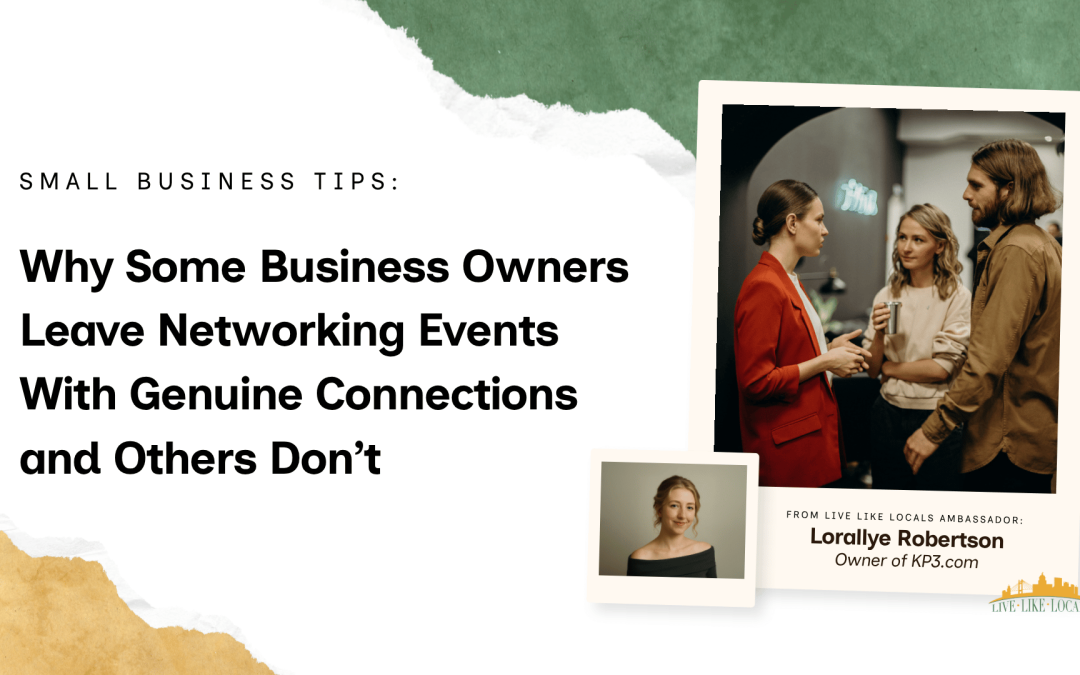
Walk into almost any networking event and you’ll notice the same thing happening almost immediately.
Some people enter the room focused entirely on introducing themselves, promoting their business, handing out cards, and trying to explain what they do as quickly as possible. Meanwhile, others seem to naturally leave with stronger conversations, future collaborations, referrals, friendships, and real opportunities.
And usually, the difference has very little to do with who had the “better” business.
Other business owners can immediately feel when a conversation is transactional.
One of the biggest misconceptions about networking is believing the goal is to sell yourself to as many people as possible. In reality, most people can immediately tell when someone is listening simply to respond, waiting for their turn to talk, or scanning the room for a “better” connection while mid-conversation.
That energy creates distance instead of trust.
The business owners who tend to build the strongest communities and the most long-term opportunities usually network differently. They enter conversations looking to learn about people, understand their businesses, support others where they can, and create genuine relationships instead of immediate sales.
Ironically, that approach often leads to far more growth over time.
Networking Works Best When It Stops Feeling Like a Sales Pitch
A lot of small business owners struggle with networking because they believe they constantly need to “perform.”
They feel pressure to have the perfect elevator pitch, constantly promote themselves, or somehow turn every conversation into a lead. After enough events, that mindset becomes exhausting not just for the person networking, but often for the people around them too.
The strongest networkers usually are not the loudest people in the room.
They are often the people asking thoughtful questions, remembering details about someone’s business, introducing people to one another, and creating conversations that feel natural instead of forced.
People remember how you make them feel far longer than they remember your rehearsed pitch.
That does not mean you should avoid talking about your business altogether. It simply means there is a difference between naturally sharing what you do and forcing every conversation back to yourself.
When networking comes from a place of curiosity and community instead of pressure, people become much more open to building real relationships with you.
Authenticity Creates Trust Faster Than Promotion Ever Will
One thing many business owners underestimate is how quickly authenticity builds trust.
People are constantly being sold to. Between social media ads, email campaigns, cold outreach, and online marketing, customers and business owners alike have become incredibly good at recognizing insincerity.
That is why genuine connection stands out so much now.
When someone takes the time to truly listen, support another business publicly, offer encouragement, share resources, or simply remember a past conversation, it leaves an impression.
And those impressions compound over time.
Some of the strongest business opportunities happen months or even years after the initial meeting because relationships were built first. Referrals, collaborations, partnerships, event invitations, podcast appearances, vendor recommendations, and client leads often come from people feeling connected to someone long before they actually “need” their services.
That is one of the reasons community-centered businesses often grow faster than businesses focused exclusively on self-promotion.
People naturally want to support businesses that also support others.
Listening Is One of the Most Underrated Networking Skills
Many people walk into networking events focused on what they are going to say.
Very few focus on listening well.
But listening is often what separates forgettable conversations from meaningful ones.
Listening creates connection far faster than selling yourself does.
When you genuinely listen to someone talk about their business, challenges, goals, or ideas, you create space for real connection instead of surface-level interaction. You also start noticing opportunities to help people in ways that have nothing to do with making a sale yourself.
Maybe you know another business owner they should meet. Maybe you know of an event, resource, collaboration opportunity, or service that could genuinely help them. Maybe they simply needed someone to feel interested in what they are building.
That kind of networking creates community instead of competition.
And ironically, people who feel supported are far more likely to remember you, recommend you, and support your business in return later.
The Best Opportunities Usually Happen After the Event Ends
One of the biggest mistakes business owners make is treating networking as a one-time interaction.
The event itself is usually just the introduction.
Community is built through consistency, not just visibility.
The real relationship building often happens afterward through social media engagement, follow-up conversations, referrals, collaborations, coffee meetings, shared community involvement, or simply continuing to support one another online.
Sometimes the businesses seeing the most success through networking are not necessarily attending more events than everyone else. They are simply better at nurturing relationships after the event ends.
A thoughtful follow-up message, commenting on someone’s content consistently, sharing another business publicly, or checking back in months later can strengthen a connection far more than a quick conversation in a crowded room ever could.
The Businesses Building Strong Communities Usually Think Long-Term
The most respected and connected business owners are rarely focused only on what they can gain immediately from a room.
Instead, they think long-term.
They understand that every conversation may not turn into a sale, but it could turn into a relationship, a future collaboration, a referral source, a friendship, or an opportunity they never expected.
That mindset changes the entire energy of networking.
People feel more comfortable around business owners who genuinely care about connection over conversion. And over time, those relationships tend to create stronger, more sustainable growth than transactional networking ever will.
The strongest business growth usually comes from genuine relationships.
Because at the end of the day, networking is not really about collecting the most business cards.
It is about building a community of people who know you, trust you, and genuinely want to see you succeed.
About the Author, Lorallye Robertson
Lorallye Robertson is the Co-Owner of KP3.com, a creative & strategic marketing studio that helps small businesses build more intentional, recognizable brands both online and in person. Through small business branding and marketing services, website design, social media management, content creation, and so much more, KP3 focuses on helping businesses create experiences that feel cohesive, memorable, and genuinely connected to their audience.
Lorallye is also a proud Live Like Locals Ambassador and the host of Local Voices, a community-focused show dedicated to highlighting the incredible businesses, entrepreneurs, and stories that make the local area unique. Having worked with businesses across many different industries, she brings a practical, real-world perspective to marketing that centers around visibility, connection, and helping small business owners show up with confidence.
Stay Connected with Live Like Locals
Get updates on upcoming events, news and giveaways.