GROW Initiative Georgia: Creating Healthier, More Connected Communities Through Education and Access
A community can only thrive when people are able to access the information, resources, and support they need.
For many families across Coastal Georgia, barriers such as language, transportation, income, and limited access to healthcare can make even basic services more difficult to navigate.
GROW Initiative Georgia is working to close those gaps.
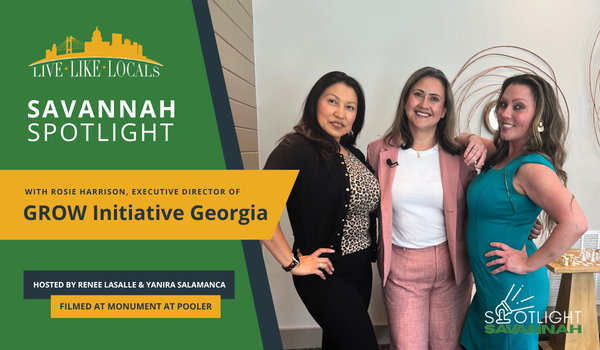
In Episode 11 of Savannah Spotlight, host Renee LaSalle sat down with Rosie Harrison, Executive Director of GROW Initiative Georgia, alongside Live Like Locals Ambassador Yanira Salamanca, to talk about the nonprofit’s bilingual education programs, health initiatives, community outreach, and its mission to make local resources more accessible for vulnerable populations throughout Coastal Georgia.
Helping Communities Grow and Thrive
GROW Initiative Georgia is a nonprofit organization focused on serving vulnerable communities through educational and health-based initiatives.
Its work is centered around a simple but important idea: people are more likely to thrive when they have access to information they understand and resources they can actually use.
For GROW, vulnerable communities can include low-income families, older adults, non-native English speakers, and others who may experience barriers to accessing healthcare, education, or community services.
Rather than creating one program and expecting it to work for everyone, the organization looks closely at what different communities need and develops programming around those realities.
That means meeting people where they are, both literally and figuratively.
Building Bilingual Communities
One of GROW Initiative Georgia’s most distinctive programs is its approach to bilingual literacy.
According to Harrison, GROW is the only organization outside of local school districts offering bilingual literacy classes of this kind in the area.
Instead of teaching only English to Spanish speakers or only Spanish to English speakers, the classes bring native English and native Spanish speakers together to learn from one another.
GROW also offers Haitian Creole and English classes.
The goal goes beyond learning vocabulary.
These classes are designed to help create stronger connections between people from different linguistic and cultural backgrounds.
When people can communicate with one another, they are better equipped to navigate schools, workplaces, healthcare, local businesses, and everyday life.
They also have more opportunities to build relationships with neighbors they may not otherwise have been able to connect with.
Language Can Affect Every Part of Daily Life
For someone moving to a new community without speaking the primary language, even routine tasks can become overwhelming.
Registering a child for school may require conversations with administrators and teachers.
Healthcare can involve unfamiliar forms, instructions, medications, vaccinations, and appointments.
Shopping, transportation, employment, and nutrition programs can all depend on being able to understand information and ask questions.
During the conversation, Yanira Salamanca spoke from personal experience about arriving in Savannah from a Spanish-speaking country and how valuable an organization like GROW can be for someone trying to navigate an unfamiliar system.
That support provides more than translation.
It provides guidance.
Knowing where to go, what questions to ask, and who can help can make a tremendous difference for someone trying to establish a life in a new community.
Making Healthcare Education More Accessible
GROW Initiative Georgia also places a major focus on community health.
The organization created a bilingual health and nutrition program designed specifically with vulnerable communities in mind.
That program has even gained attention beyond Georgia, with the initiative recently presented in Spain through one of GROW’s board members.
The organization took care to make the information engaging and accessible rather than simply distributing materials filled with medical terminology.
That approach matters because understanding health information can directly affect someone’s ability to make informed decisions about their own wellbeing.
A screening number is only useful if the person receiving it understands what that number means.
Bringing Free Health Screenings Into the Community
Instead of requiring people to travel to a central location, GROW takes many of its health services directly into local communities.
The organization provides free community health screenings that can include:
- Blood pressure screenings
- Glucose screenings
- Cholesterol screenings
These services can be especially valuable for people who experience transportation barriers or limited access to traditional healthcare.
Community health workers are trained not simply to perform screenings, but to educate participants about what the results mean.
For example, someone may know their blood pressure reading but have no idea whether that number falls within a normal range or why it matters.
GROW’s team helps explain those measurements in an approachable way while remaining clear that the organization does not diagnose medical conditions.
The goal is education and awareness.
Connecting People With Local Resources
A screening can sometimes reveal that someone may need additional care.
That is where GROW’s community navigators become especially important.
Participants who may be at risk can be connected with local resources that are better equipped to provide follow-up care and services.
This creates a bridge between identifying a potential issue and knowing what to do next.
For people unfamiliar with the healthcare system, that connection can be just as important as the screening itself.
Having someone explain where to go, who to contact, and what resources may be available can make healthcare feel much more manageable.
Addressing the Social Determinants of Health
GROW Initiative Georgia’s programs are shaped by the social determinants of health.
These are the everyday conditions that can influence a person’s health and quality of life, including access to education, transportation, financial resources, healthcare, food, language support, and community connections.
The organization recognizes that health does not exist in isolation.
If someone cannot communicate with a healthcare provider, struggles to access transportation, or does not understand how to navigate available resources, those barriers can affect their overall wellbeing.
And when one part of the community is consistently underserved, the impact does not stop with that group.
It can place additional pressure on schools, healthcare systems, nonprofits, emergency services, and other community resources.
By helping people access information earlier, GROW hopes to create stronger and healthier communities overall.
Giving People the Tools to Understand Their Own Health
Education is at the center of GROW’s health initiatives.
Community health workers are trained to teach participants what common health measurements mean and why they matter.
Instead of simply saying that a blood pressure, glucose, or cholesterol number is high or low, they help people understand the ranges and the significance behind them.
That knowledge gives participants a stronger foundation for asking questions and making decisions about their health.
It is another example of GROW’s larger philosophy.
Support should not only solve an immediate problem.
Whenever possible, it should give someone the knowledge to navigate similar situations with greater confidence in the future.
Supporting Children Through Literacy and Development
GROW’s work also extends directly to children.
The organization has created a literacy camp where children can receive a variety of free assessments and resources.
The program is designed to include access to autism assessments, speech services, occupational therapy evaluations, and hearing screenings.
Children will also receive books they can take home, helping families begin or expand their own home libraries.
Programs like this can help families identify developmental or educational needs earlier while connecting them with additional resources when necessary.
At the same time, something as simple as placing books into a child’s home creates more opportunities for learning beyond the classroom.
It Takes Community Support
Programs of this scale require people, expertise, partnerships, and funding.
GROW Initiative Georgia is continually looking for ways the community can help.
Current needs include:
- Volunteers
- Board members
- Financial donations
- Corporate sponsors
- In-kind donations
- Professional expertise
- Community connections and partnerships
For professionals looking to give back, joining a board or volunteering specialized expertise can be especially valuable.
For businesses, sponsorships and in-kind support can help programs reach more people.
And for individual community members, donating time or financial resources can help GROW continue bringing services directly into communities that need them.
Meeting People Where They Are
One of the most important messages from the conversation is that someone does not need to understand the entire system before reaching out.
GROW works directly with people to help determine what support may be available and where they can go next.
People interested in receiving assistance or learning more about the organization can contact the GROW Initiative Georgia office at 912-200-7954 or email info@thegiga.org.
Information is also available at thegiga.org.
On social media, the organization can be found under GROW Initiative GA.
For community members who want to make a financial contribution, donations can be made through the organization’s website. Checks can also be mailed to:
10710 White Bluff Road
Savannah, Georgia 31406
Stronger Communities Start With Access
The work of GROW Initiative Georgia shows how closely education, health, communication, and community connection are linked.
Learning another language can make it easier to speak with a child’s teacher.
Understanding a blood pressure reading can encourage someone to seek appropriate healthcare.
A hearing screening can identify an issue affecting a child’s learning.
A community navigator can help someone discover resources they did not know existed.
Each of those moments may seem small on its own, but together they can help create healthier, more connected communities.
By removing barriers and meeting people where they are, GROW Initiative Georgia is helping more Coastal Georgia residents understand their options, access local resources, and participate more fully in the community around them.
Watch Episode 11 of Savannah Spotlight to hear the full conversation with Rosie Harrison and learn more about how GROW Initiative Georgia is using bilingual education, health outreach, literacy programs, and community partnerships to help families throughout Coastal Georgia grow and thrive.
Episode 11 of Savannah Spotlight was filmed at Monument at Pooler.
Stay Connected with Live Like Locals
Get updates on upcoming events, news and giveaways.