My Veterans Place Savannah: Helping Veterans Navigate Life After Military Service
Leaving the military is not simply a job change.
It can mean losing a familiar structure, a built-in support system, a clear chain of command, and the routines that shaped everyday life for years.
For many veterans, the hardest part is not knowing where to turn next.
That is exactly the gap My Veterans Place Savannah works to fill.
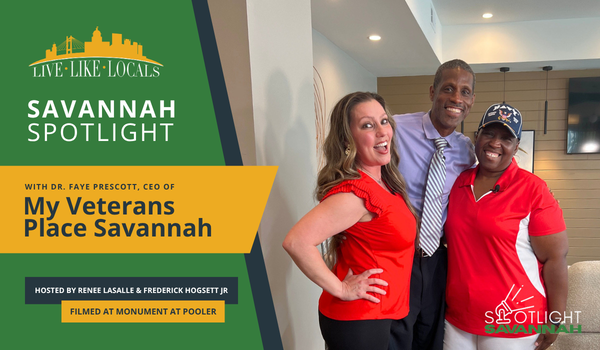
In Episode 10 of Savannah Spotlight, hosts Renee LaSalle and Frederick Hogsett Jr. sat down with Dr. Faye Prescott, founder of My Veterans Place Savannah, to talk about the challenges veterans face during and after transition, the importance of community connection, and the resources available to help veterans build stable, fulfilling civilian lives.
A Mission Built From Personal Experience
Dr. Prescott understands the transition from military to civilian life because she has lived it herself.
When she separated from the military, she remembers needing information and support but not knowing exactly where to find it.
There was no one waiting on the other side to explain which records to keep, how to connect with the VA, what paperwork would matter later, or what steps she should take first.
Even details that may seem small, such as securing medical records, personnel records, or making sure contact information is updated before separation, can become critically important after leaving service.
Her own experience helped shape the mission behind My Veterans Place Savannah.
Today, the organization works to give other veterans the guidance she wishes she had when she transitioned out.
Helping Veterans Find the Right Resources
My Veterans Place Savannah is a service organization, but there is no one-size-fits-all approach to the people it serves.
One of the first questions the team asks is whether a veteran is already connected with the VA.
From there, the conversation becomes much more individualized.
Some veterans may need help finding housing. Others may need financial resources, transportation, help gathering documentation, or connections with other organizations.
And sometimes, what a veteran needs most is simply someone who understands.
Dr. Prescott explained that veterans can sometimes feel dismissed or misunderstood when trying to talk about their experiences with family members or others who have never served.
Connecting with other veterans can provide a sense of familiarity, community, and understanding that is difficult to replicate elsewhere.
The organization works to rebuild some of that connection by helping veterans find one another and strengthening the broader military community.
Doing the Footwork So Veterans Do Not Have To
Finding help can become exhausting when it requires calling one organization after another, only to discover that each one provides a different service.
My Veterans Place Savannah tries to remove some of that burden.
Instead of handing veterans a long list of phone numbers and telling them to start calling, the organization works behind the scenes to identify the appropriate resource.
Dr. Prescott and her team connect with VA offices, caseworkers, nonprofit organizations, and other service providers throughout the country.
When veterans contact the organization from outside Georgia, the team works to understand the resources available in that specific community and establish direct connections whenever possible.
The goal is simple: let the organization do the footwork so the veteran can spend less time navigating systems and more time receiving the help they actually need.
Supporting Veterans Experiencing Homelessness
Housing is one of the most urgent needs My Veterans Place Savannah encounters.
Some veterans seeking help have no income and no permanent place to live.
The organization helps connect those veterans with housing resources, including tiny-home communities created specifically for veterans.
That process can involve much more than filling out a form.
Some veterans experiencing homelessness no longer have their DD-214 or other military documents because paperwork has been lost during years of moving from place to place.
My Veterans Place works with community partners, government agencies, and the VA to verify military service when traditional documentation is unavailable.
From there, the team can help veterans complete applications, gather what they need, and connect with housing opportunities that may be available.
Dr. Prescott said the organization has successfully helped multiple homeless veterans move into tiny-home communities.
A Tiny Home Can Be the Beginning, Not the End
For veterans who move into tiny-home communities, stable housing can create the breathing room needed to begin planning for what comes next.
My Veterans Place Savannah offers self-development workshops and other educational programs designed to help veterans take those next steps.
One focus is homeownership.
The organization brings together financial professionals, homebuying educators, brokers, and real estate professionals to help veterans understand what it takes to eventually purchase a home of their own.
Those workshops are not limited to people who are ready to buy tomorrow.
Veterans with a three-year or five-year goal can begin learning now, understanding what lenders may look for, improving their financial position, and creating a realistic plan.
That preparation has already produced success.
During the interview, Dr. Prescott shared that two veterans have moved from tiny-home communities into homes they purchased themselves through the support and education provided by the program.
The organization has also helped an active-duty female Air Force member complete its program and purchase a home in Atlanta.
For Dr. Prescott, those milestones are personal.
She and the team often attend closings, retirement ceremonies, promotions, and other celebrations because the veterans they serve become part of an extended community.
Preparing Veterans for Financial Stability
Housing is only one part of long-term stability.
My Veterans Place also provides financial workshops designed to help veterans and military spouses understand budgeting, credit, homeownership, and other financial topics.
Many of these programs are offered virtually, which allows the organization to reach people far beyond Savannah.
Participants can speak directly with brokers and other professionals, ask questions, and begin preparing for future goals even if they are not ready to act immediately.
That approach reflects a larger theme throughout the organization.
The goal is not simply to solve today’s crisis.
It is to help veterans understand the next step, prepare for it, and build the knowledge needed to make more informed decisions moving forward.
Why Military Transition Can Feel So Different
For civilians, changing jobs may mean learning a new workplace, adjusting to new coworkers, or adopting a different routine.
Leaving the military can involve an entirely different level of transition.
Service members spend years operating within a structured environment where expectations, procedures, housing, support systems, and leadership structures are clearly defined.
Then, suddenly, they enter a civilian world where many of those systems no longer exist.
Frederick Hogsett Jr., himself a Coast Guard veteran, spoke during the episode about how dramatically different that experience can feel.
Military skills such as leadership, management, teamwork, and discipline absolutely transfer into civilian careers, but figuring out where those skills fit can still be difficult.
Some veterans may also struggle with losing the sense of purpose that came with military service.
That is why organizations like My Veterans Place matter.
They provide another veteran on the other side who can say, “I understand what you are talking about.”
Bringing the Civilian and Military Communities Together
Savannah and the surrounding Coastal Empire are deeply connected to the military.
Hunter Army Airfield and Fort Stewart place a significant military population right in our backyard.
Those service members, veterans, and military families are not separate from the community.
They are neighbors, healthcare providers, business owners, employees, parents, volunteers, and friends.
Dr. Prescott believes there is still an opportunity to build stronger connections between the civilian and military communities.
That starts with understanding.
Veterans may communicate differently, carry different experiences, or relate strongly to their years of service. That does not mean they should be dismissed or reduced to stereotypes.
A stronger community is created when civilians and veterans have opportunities to work together, understand one another, and share resources.
Veterans Can Help Veterans, Too
Successful veterans also have an opportunity to give back.
Many veterans go on to become business owners, doctors, financial professionals, tradespeople, executives, and leaders throughout their communities.
My Veterans Place encourages those individuals to consider volunteering their time or expertise.
Different veteran organizations fill different needs, which creates opportunities for people with a wide range of skills to contribute.
A professional may be able to teach a workshop.
A business owner may donate services.
Someone else may volunteer time, offer mentorship, or help connect veterans with employment opportunities.
For nonprofit organizations, donated expertise can be especially valuable because many of the services needed to support veterans still come with a cost.
Transportation Can Create Another Path Forward
My Veterans Place Savannah also works to address another major barrier: reliable transportation.
Through a partnership with the National Auto Body Council, the organization helps veterans in need connect with vehicle assistance programs throughout the United States.
A reliable vehicle can affect almost every part of stability.
It can mean getting to work consistently, attending medical appointments, taking children to school, participating in community activities, and accessing services that might otherwise remain out of reach.
Like housing, transportation can become one of the building blocks that helps a veteran regain independence.
How the Community Can Support the Mission
The organization’s biggest needs include financial support, volunteers, professional expertise, and stronger community connections.
Donations help My Veterans Place Savannah continue supporting veterans experiencing homelessness and connect them with housing, resources, transportation, and other services.
Community members can also make a difference by donating time or professional skills.
Businesses and individuals willing to provide services at no cost or reduced cost can help nonprofit dollars stretch further and allow the organization to serve more veterans.
Connect With My Veterans Place Savannah
To learn more, request assistance, volunteer, or support the organization:
- Website: myveteransplacesavannah.org
- Phone: (912) 733-2113
- Social: Find My Veterans Place Savannah on Facebook and Instagram for upcoming workshops, programs, and opportunities to get involved.
Creating a Place Veterans Can Turn To
For more than five years, My Veterans Place Savannah has worked to make sure veterans do not have to navigate life after military service alone.
Sometimes that means helping someone find housing.
Sometimes it means replacing missing military paperwork, preparing for homeownership, connecting with the VA, finding a vehicle, or identifying resources hundreds of miles away.
And sometimes it simply means giving a veteran another veteran to talk to.
That sense of connection is at the heart of the organization’s mission.
Because after years of relying on the people beside you, transitioning into civilian life should not mean suddenly having to figure everything out by yourself.
Watch Episode 10 of Savannah Spotlight to hear the full conversation with Dr. Faye Prescott and learn how My Veterans Place Savannah is connecting veterans with resources, community, and new opportunities throughout Savannah and across the country.
Savannah Spotlight is presented by The Horne Law Firm. Episode 10 was filmed at Monument at Pooler.
Stay Connected with Live Like Locals
Get updates on upcoming events, news and giveaways.